I Quit Stability to Freelance for Charities — Here’s How It’s Going
“How’s business?”
It’s a question I get asked a lot now. Four months ago, nobody was asking me that.
For the first few months, my answer was usually something like, “Okay, I think?” or “Unnervingly well,” which probably tells you everything you need to know about my mindset at the time.
Alongside the excitement of going freelance came a constant stream of questions: Have I done the right thing leaving a stable job? What if the work dries up? Do people think I’m crazy? Am I crazy?
Four months in, though, I’m starting to realise something important: questioning yourself after a huge life change is normal. It would actually be stranger not to.
Slowly, the panic is being replaced with something else — trust. Trust in my abilities, trust in my decisions and trust that I can build a way of working that aligns more closely with the life I actually want.
Because the reality is, I’m more present with my family. I’m more engaged with my children. I’m significantly less stressed. Work now feels much more aligned with my values, energy and the pace of life I want to create.
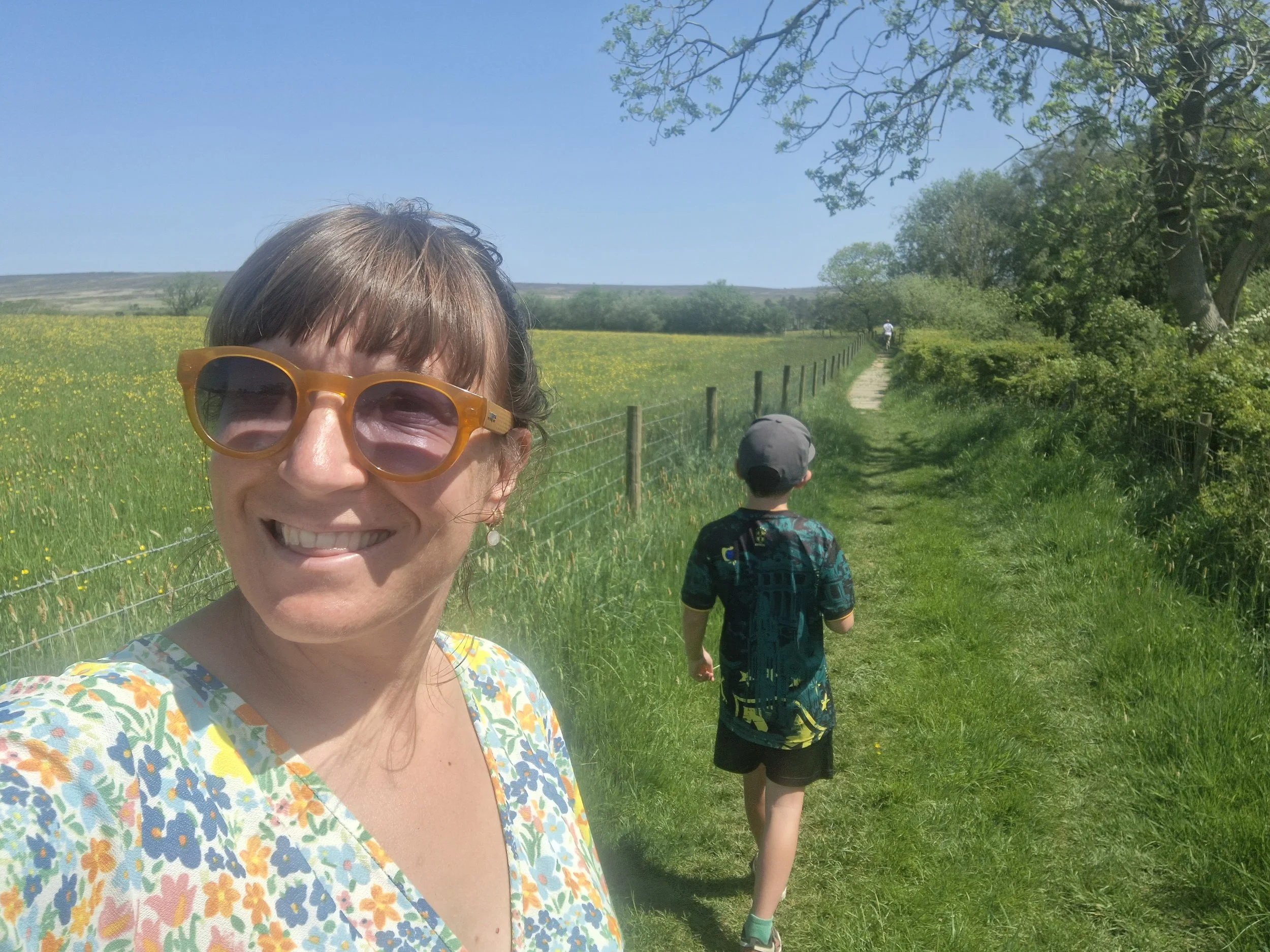
Photo of Kelly with family in background on a countryside scarecrow hunt.
So, what have I actually been doing over the last four months?
Quite a lot, it turns out.
This blog is partly a reflection on how far I’ve come already, but also an acknowledgement of the lessons freelancing is teaching me in real time.
Month 1–2: The Wobbly Stage
Despite having work almost immediately, this was definitely my “wobbly” phase.
Externally, I was trying hard to present myself as “a safe pair of hands.” Internally, I felt vulnerable and was being unbelievably harsh on myself.
My first client actually came through a fellow freelancer. They weren’t from the voluntary sector at all, but a sole trader in the wedding industry.
Initially, I agonised over whether I should even take the work on. I’d just launched a website talking about supporting charities and purpose-led organisations, so part of me worried that taking on work outside that space somehow made me inconsistent or unclear.
After a lot of overthinking and one very good initial conversation with the client, I realised something important: nobody else was putting these rigid rules on me except me.
I connected with the client instantly and could immediately see opportunities to help them gain clarity around their positioning and future growth. Even though I spent much of that project battling imposter syndrome internally, it taught me one of the biggest lessons of freelancing so far: trust your gut.
Not every opportunity has to fit perfectly into the box you originally created for yourself.
Around the same time, I connected with another freelancer on LinkedIn. We arranged a virtual coffee because we both had backgrounds in infrastructure charities and immediately clicked. To my surprise, after the conversation they asked me to support them with communications planning and ongoing consultancy work.
During this period I was still trying to figure out pricing, value and how to confidently communicate what I bring to the table. When I was asked whether I could reduce my rate, every piece of freelance advice I’d ever heard told me not to do it.
But I trusted my instincts.
I agreed to a reduced scope because I knew the experience would help me build confidence as a consultant and strengthen my skills. Looking back, I’m genuinely glad I made that decision. Not because working for less should become a habit, but because I understood why I was making that choice and it aligned with where I was in my journey.
That experience taught me another important lesson: take advice from experienced people, but don’t be afraid to carve your own path.
Confidence doesn’t appear overnight. Sometimes it’s built project by project, conversation by conversation.
It also helped me start valuing myself more.
I’ve already had one proposal rejected because my pricing was considered too expensive. Four months ago that probably would have sent me into a spiral. Now, whilst of course it’s disappointing, I also understand something I didn’t fully understand before: not every client is the right fit.
In this instance, I was asked whether I could reduce my rates and, rather than immediately lowering my pricing, I explained the value behind the work, the experience I bring and the level of support involved. Ultimately, the proposal wasn’t accepted and that’s okay.
It was actually an important lesson in recognising that good working relationships need alignment on both sides. The right clients won’t simply be looking for the cheapest option — they’ll value the thinking, expertise and approach behind the work too.
Month 3–4: Finding My Feet
Months three and four felt different.
I onboarded two new clients simultaneously, both through LinkedIn. One was a CIC I’d admired for a while and was genuinely excited to support, while the other was a consultant leading sustainability work with a charity who brought me in to support their communications and impact strategy.
I absolutely loved working with both organisations.
They offered completely different services, but both were deeply rooted in improving outcomes for people and communities. Even though my involvement was relatively short-term, I still felt part of something meaningful.
That has easily been the most rewarding part of freelancing so far: getting to work alongside purpose-led organisations and people who genuinely care about making a positive difference. After all, that’s why I entered the voluntary sector in the first place.
One thing I’ve been reflecting on recently is how much my Sociology degree quietly shapes the way I work. I’m endlessly interested in understanding why people behave the way they do, how systems shape relationships, the role identity and belonging play in communication, and how culture influences the way we connect with each other.
Ultimately, good communications work comes down to understanding people.
What resonates with them? Why do they care? Why don’t they care? How are they shaped by the systems around them?
The more freelance work I do, the more I realise that communications isn’t just about content. It’s about connection.
It’s also becoming increasingly clear to me that communications challenges are often deeply tied to organisational culture. Internal tensions, unclear structures, poor communication between teams and uncertainty during change always ripple outward.
The more organisations I work with, the more interested I become in helping purpose-led organisations navigate not just external messaging, but the internal dynamics that shape it too.
I’ve even started considering adding coaching training into the mix in the future, because so much of the work I enjoy most centres around helping people and organisations find clarity, confidence and alignment.
Entering Month 5
I’m entering the next phase of freelancing with two new clients I’m genuinely excited to work with.
Both are focused on advocacy and sustainable impact, and both are looking to refresh and revitalise their communications. I’m already bursting with ideas around how we can improve messaging, increase engagement and create stronger systems that empower people long-term rather than relying on constant reactive communication.
What has surprised me most is how quickly freelancing has shifted from simply asking, “Can I make this work?” to thinking much more intentionally about the kind of work, culture and spaces I want to help create long term.
One idea I keep coming back to is creating an in-person meet-up for charity freelancers on the North Yorkshire coast. Something rooted in honesty, connection and community rather than networking for networking’s sake.
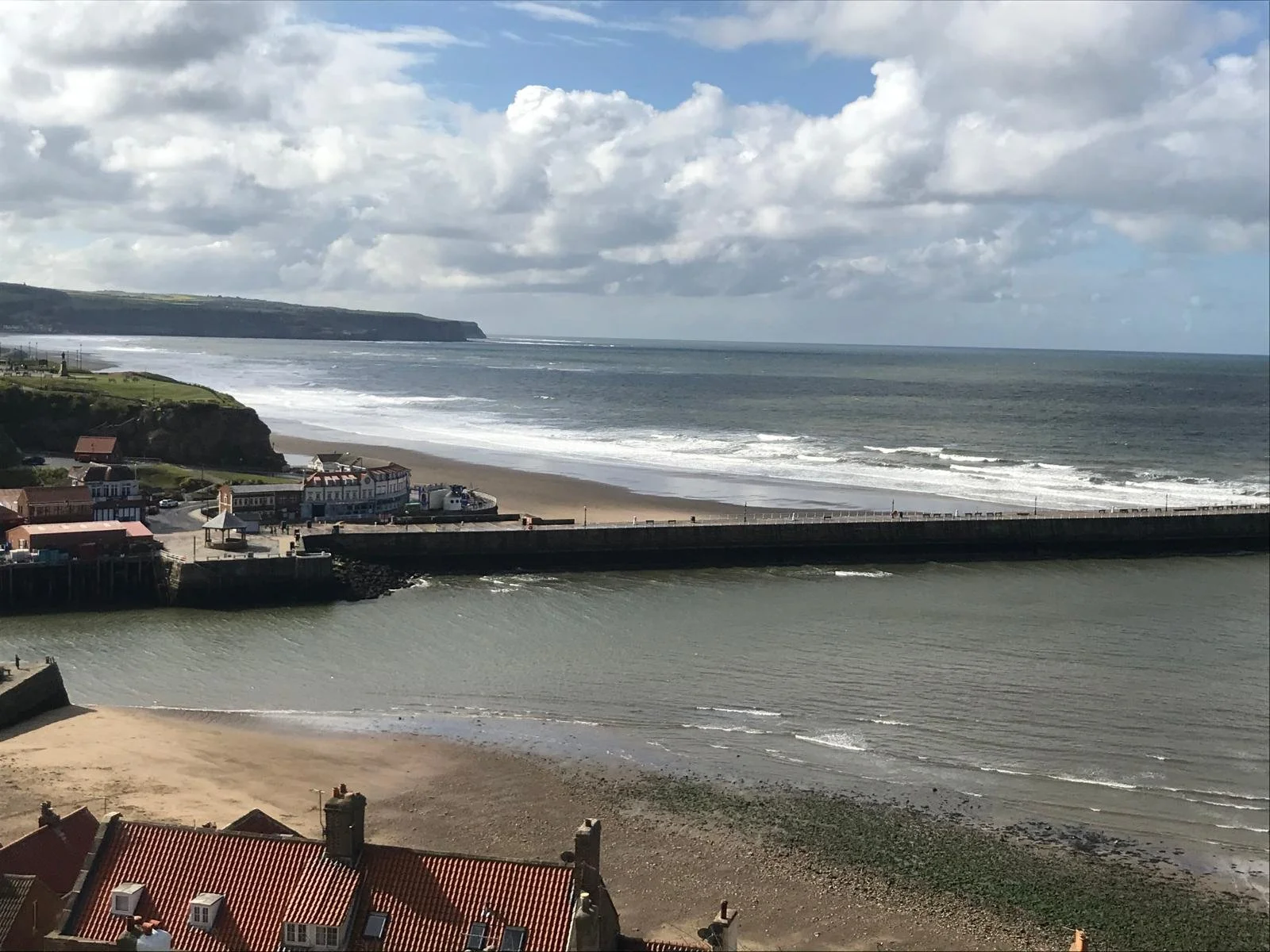
Photograph of the Whitby coastline.
Whilst freelancing can be incredibly freeing, it can also feel isolating. Having conversations with people who genuinely understand the realities of self-employment has become one of the most valuable parts of this journey so far.
I’ve realised I need those spaces. Not just spaces to talk about work, but spaces where people can share uncertainty, ambition, ideas, frustrations and encouragement openly.
I’m also learning the importance of asking questions to the right people. I process things verbally, which means I naturally want to talk through ideas, worries and decisions. But there’s a huge difference between talking to people who care about you and talking to people who truly understand the context of freelancing.
Finding other freelancers, consultants and people who “get it” has been invaluable.
And perhaps the biggest shift compared to four months ago is this: I’m no longer constantly waiting for everything to collapse.
Of course there are still moments of doubt. I think there probably always will be. But I’m learning that building a freelance career is as much about mindset as it is skill.
I’m learning to stop seeking permission, stop trying to please everybody and push myself outside my comfort zone because that’s where the best learning happens.
Most importantly, I keep coming back to why I chose this path in the first place.
This was never just about work. It was about creating a life and culture that felt more sustainable, more aligned and more human.
One unexpected side effect of freelancing has been rediscovering space for thinking too. Over the last four months I’ve read books that have challenged how I think about work, identity and creativity, listened to a lot of music while working from cafés and kitchen tables, and generally spent more time noticing things rather than rushing through them.
It turns out creating a different way of working also changes the way you experience everyday life.
Current read: Complaint by Sara Ahmed
Currently on repeat: My Type — Saint Motel
Four months in, I’m still learning.
But I think it’s going pretty well.
How’s it going for you?
Feel free to get in touch if this resonates. One of the most exciting parts of freelancing has been the people I’ve met along the way, and I’m always open to a conversation and a virtual cuppa.